THE
JOURNEY GAME
The Journey is a fun adventure game that uses
challenges, rewards, and consequences to teach children the
skills necessary for academic and personal success.
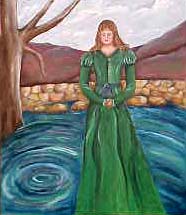 "The Emerald Wizard" "The Emerald Wizard" |
|
Once in action, children are taught to “work
smart”. |
The Journey serves as a behavior management
program, in that children play The Journey game by hiking to each of The Journey's
Nine Adventures.
Each day children hike or take a step
toward the next adventure by following the rules of the
hike.
The Rules of the Hike require children to:
1. Follow the rules
2. Cooperate with
requests
3.
Participate in their daily assignments
As children
successfully play The
Journey game, they move forward on a map, which is illustrated
on the four walls of a room.
The Journey map depicts the nine
adventures children will experience as they play The Journey
game.
At each
adventure, children in the classroom attend a group that provides training in
skills, such as self-respect, social skills and
self-discipline. If a
child masters these skills, they earn that adventure’s
rewards.
The
Journey rewards include increased privileges, small items, and
positions of leadership. Also, children are taught that the
greatest reward of all is Being of Service to others.
Problems are Challenges
As children play The Journey game,
they are taught – that problems are merely challenges in
disguise. Once a problem is seen as a challenge, they learn
that courage is required when one faces a challenge. Courage
is required to do “hard things”.
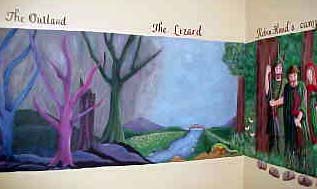 "From one Journey, to
another" "From one Journey, to
another" |
|
As children play The Journey game, they move
forward on a map, which is illustrated on the four walls
of the
classroom. | Next, children learn to “work hard” and “work
smart” to solve their problems. To work hard means that a
child is willing to put forth the effort and determination
necessary to face the challenge at hand.
Once in action, children are taught
to “work smart”. This means a child prepares an effective plan
that is simple and efficient. After developing their plan,
children are taught to focus their attention without
distraction and to work hard until they reach their
goal.
When children successfully
face their challenge and reach their goal, they are said to
have had a mastery experience. The Journey game presents
children with many challenges and therefore many opportunities
for mastery experiences.
Over time, with repeated mastery
experiences, children develop the belief that whether they
succeed or fail in any endeavor depends upon their effort –
this is referred to as having an internal locus of
control.
For
children to successfully reach their goals, they need specific
skills. The Journey teaches children the skills necessary for
success. The Journey skill-building program teaches children
basic, intermediate, and advanced skills.
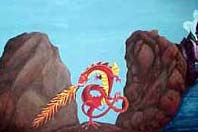 "The Crimson Dragon" "The Crimson Dragon" |
|
The Journey teaches children
the skills necessary for
success. | The basic skills begin with good personal hygiene,
appropriate dress, cooperation, cleaning up one's own messes,
and doing no harm to others.
The basic skills also include
relationship skills, assertiveness, task persistence,
frustration tolerance, and recovery from negative moods.
The Journey
training in intermediate skills includes: teamwork,
leadership, mentoring, and how to be a positive role
model.
Finally, The Journey training in advanced skills
includes: relaxation training, dream work, acts of human
kindness, facing your past, thankfulness, and creative
self-expression.
The Journey training in advanced skills also teaches
children to appreciate the magical or wonderful moments of
life – such as beautiful sunsets, hiking in the woods, or
looking into a loved one’s eyes.
The Journey hopes to inspire
children toward success and to provide them with the skills
and values that can lead to a more meaningful life.

|